How can the complex needs of entrenched homeless people be addressed through an integrated approach?
Designing Crisis Interventions – A project promoting new ways of working and deep collaboration between a local authority, its commissioned services, the local charities, and the community to design relief strategies that tackle the homelessness crisis in an integrated approach.
London, 2024 | Client: The public
My role: Service Designer as part of the Transformation team at Ealing Council. As part of the team of this exploratory project, I was part of carrying out desk and field research, designing new tools to facilitate conversations for stakeholder engagement and prototyping new relief strategies to tackle homelessness. I led in building relationships with the local charities and commissioned services, and designing the format and tools for the first engagement workshop with stakeholders.
THE BRIEF
Many of the things that get in the way of people living thriving lives are rooted in complex personal, social and societal problems, which are becoming increasingly complex – exacerbated by the cost of living, the housing crisis, pandemic legacy, global displacement and deepening inequality. These complexities are triggering situations of crisis for many individuals and communities.
The Transformation team at the London borough of Ealing Council was tasked by the senior leadership team to explore the meaning of the concept ‘crisis’ in the local context and better understand the local authority’s current response to crisis. Through this, the team was meant to identify opportunities to respond to crisis differently and propose a project to design and test a new model for delivering crisis interventions.
After a three-week scoping activity, the team identified different opportunities to frame the project’s aim, which were to promote a better joined up approach among stakeholders and test the solutions in the real world, in the context of reduced funding and the negative impact of delayed regeneration projects.
#01 A better joined up approach, that leverages the energy of teams to make a change by enabling them with effective resources and approaches.
#02 A testbed for experimentation, which can become an opportunity to prototype new approaches that can be implemented in other projects.
#03 A project addressing the negative impacts of relayed regeneration projects, which take a toll in community development and impedes building resilient communities.
#04 A public that considers the reduction in public funding, which makes inevitable looking for new models that create greater value at lower costs.
THE FOCUS
Havelock (Southall, borough of Ealing, London) is a complex example of how crisis presents within a community, experiencing high levels of street homelessness, antisocial behaviour, safeguarding vulnerabilities, substance misuse and health issues.
The Council, its commissioned services, and the local charities are already working to improve the wellbeing of residents and people sleeping in the streets. However, given the intricate nature of the situation, and the fact that many of the homeless people are undocumented and therefore not eligible to access many publicly funded services, some actions may take longer than expected to produce the desired results.
How can we look at the issue differently to design more effective approaches?
NEW TOOLS FOR WORKING DIFFERENTLY
In order to come up with innovative strategies, co-created with diverse stakeholders, it is essential to design tools that allow new ways of working, promote collaboration and creativity, and are engaging, playful and inclusive.
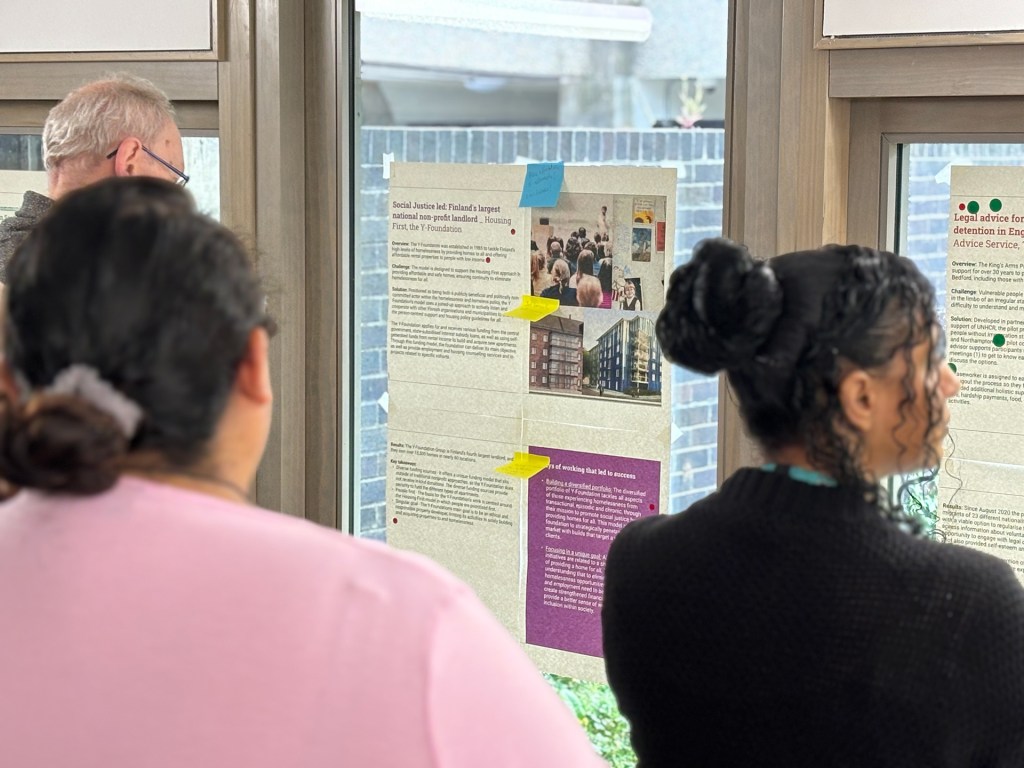
With this aim, we designed a series of tools and a creative workshop, where we invited a multidisciplinary stakeholder group composed by people working in the Council, outreach teams from commissioned services and frontline workers from local charities:
- We digested our desk research into a meaningful and easy-to-access tool, called ‘6 Models’ – a collection of six different approaches to address homelessness around the world – used before the workshop to engage and invite stakeholders.
- During the workshop, the ‘6 Models’ were used as a vehicle to reflect on the current work being done, and to start a conversation about a potential 7th Model through initial rapid prototyping.
Engagement tool pre-workshop, consisting of a 10′ playlist introducing the workshop and presenting the ‘6 Models’:
Workshop pictures:
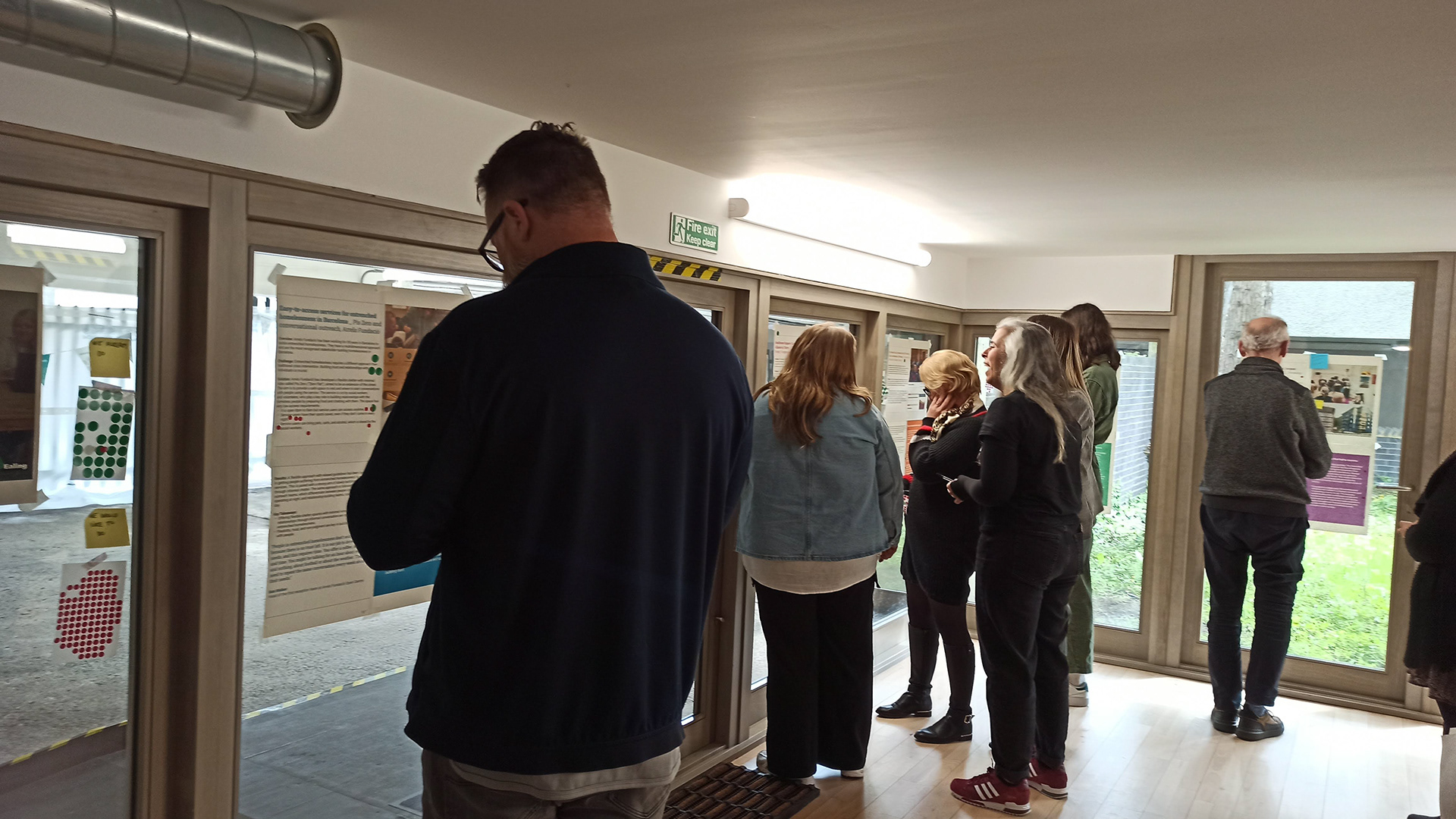
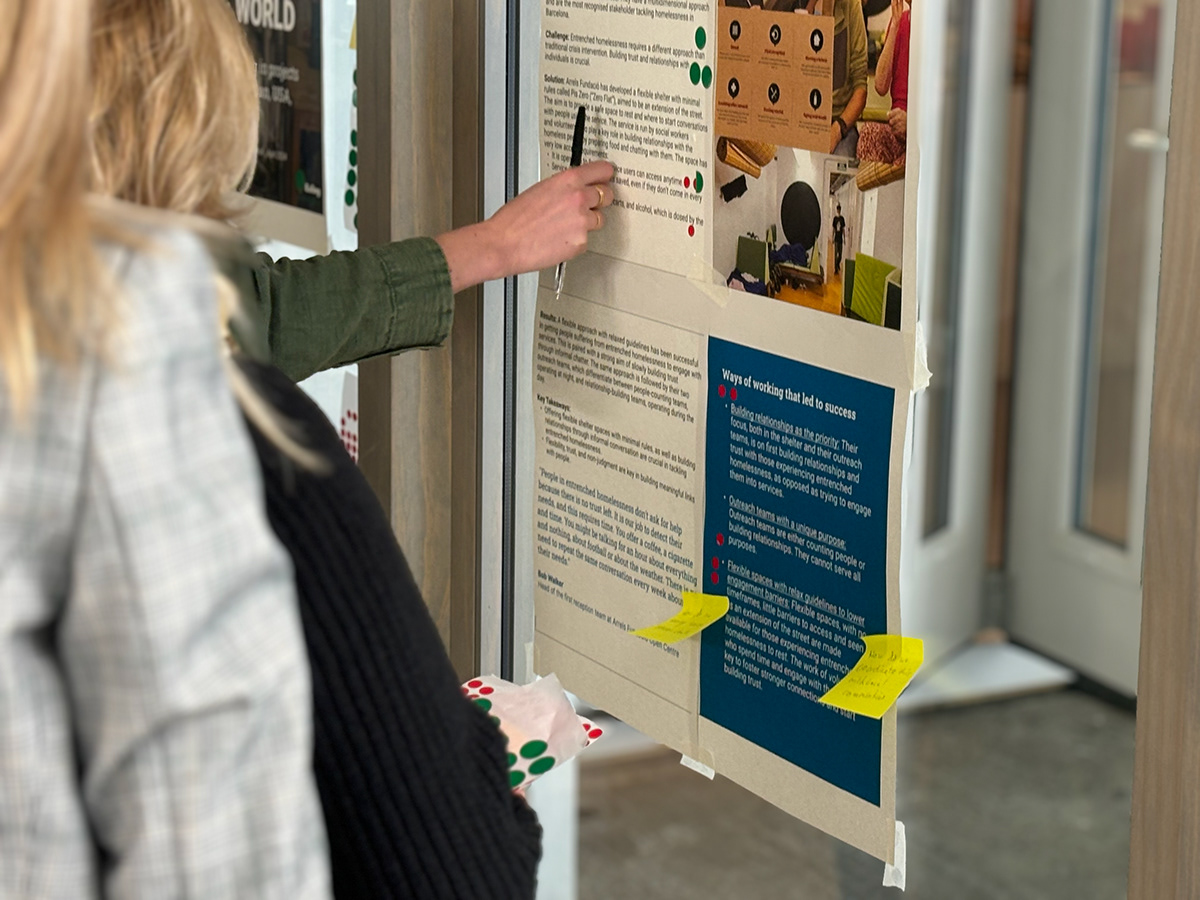
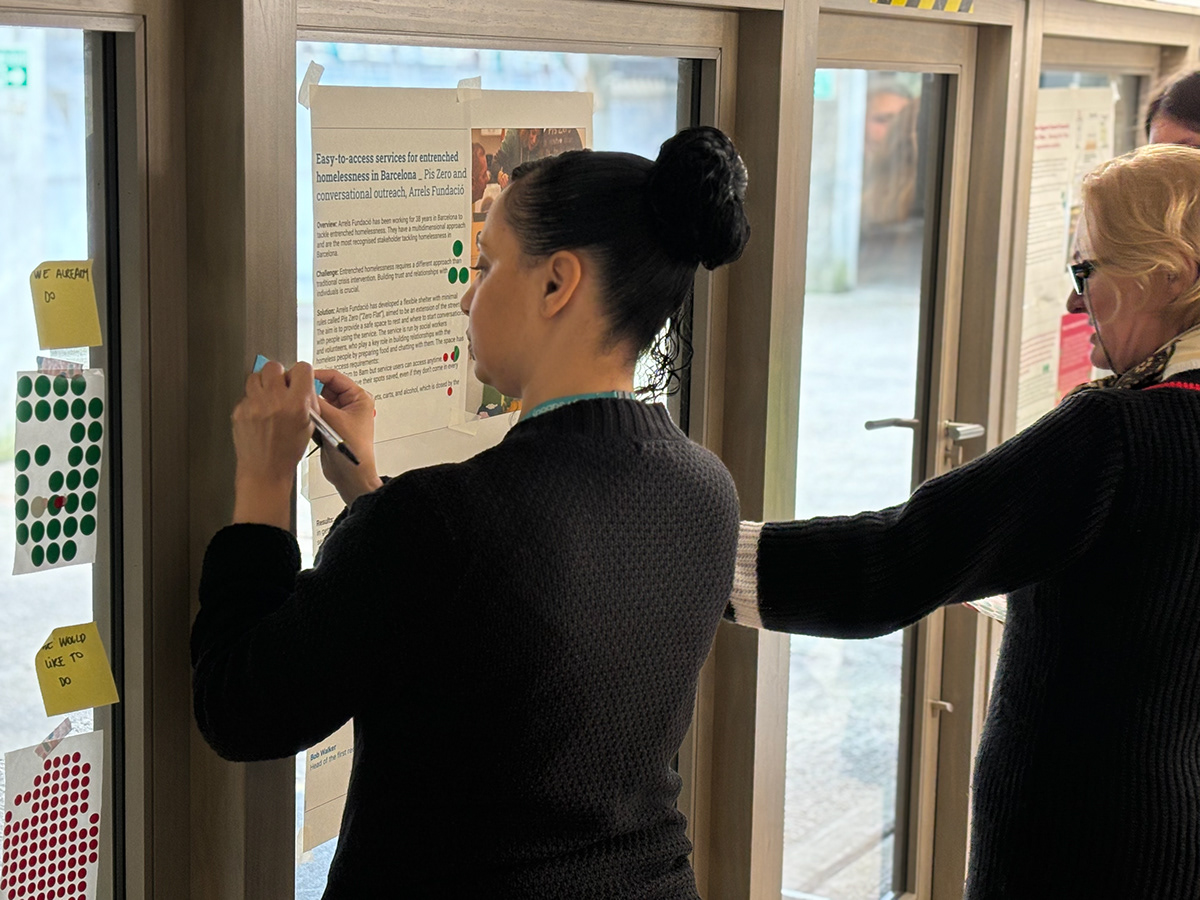
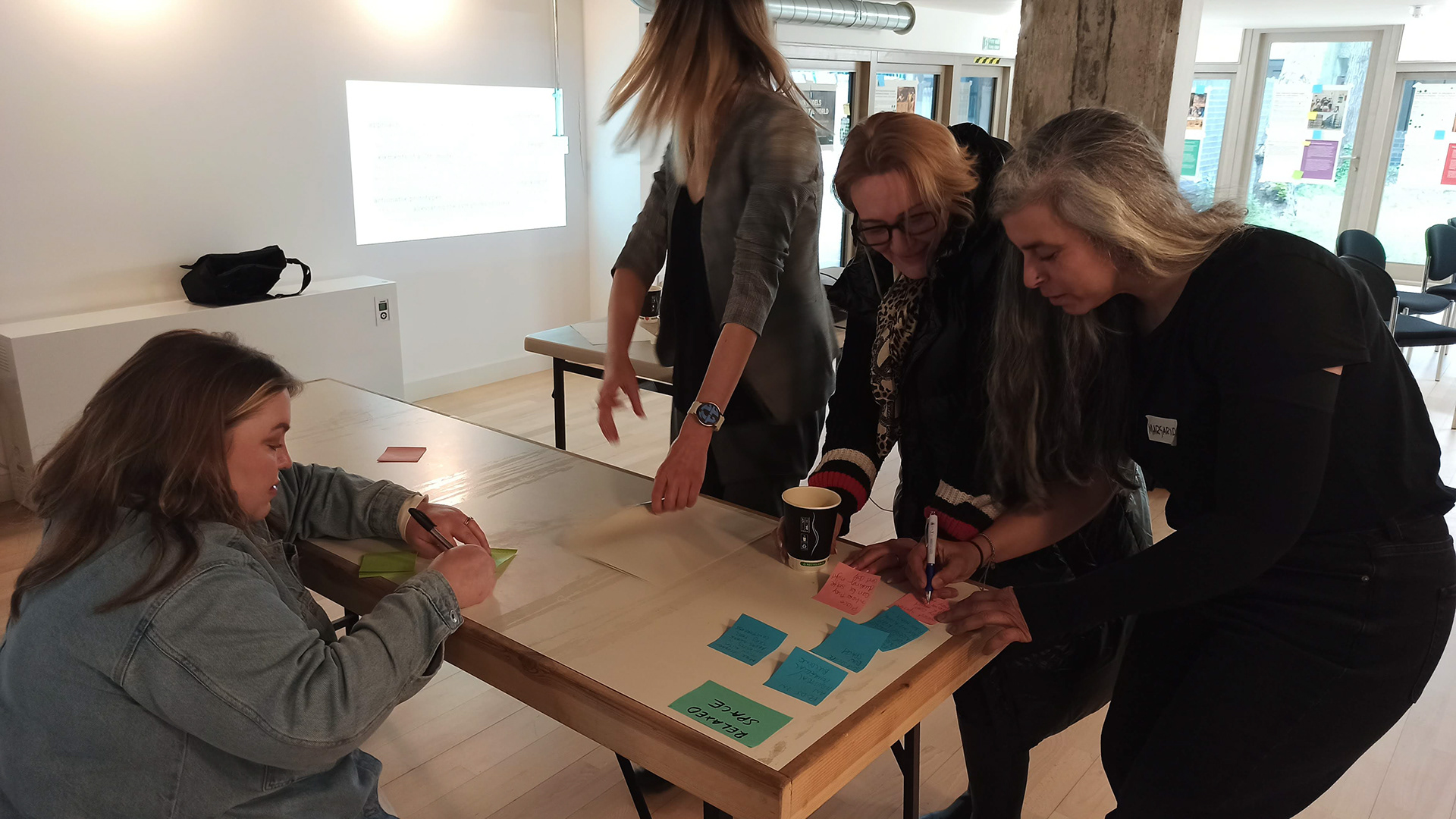
(Click images to see the descriptions)
“… it was awesome to connect with other people involved and hear their perspectives. Everyone brought something valuable to the table, which made the whole thing richer… It just seemed like a really practical and compassionate approach.” Workshop participant, Frontline worker with homeless people
WHAT’S NEXT
The areas of interest coming out of the workshop were:
- Deeper collaboration, and how to leverage shared data to help us work better together.
- Physical spaces, and how they can help us work withpeople with entrentched monelessness with more dignity and care.
- Upskilling, and how it can be a tool to empower people with entrentched homelessness as a step towards being out of the streets.
After the workshops, we explored these areas with the stakeholders to test and co-produce them with people with lived experience. When I left Ealing Council, the project had continued towards opening a hyper-local housing hub in Havelock Estate, a space to bring all the relevant stakeholders together to tackle the issue in an integrated way.
 Ada Maymó Costa