How can we equip organisations supporting farmers with tools to facilitate spaces to envision alternative preferable futures of farming?
Regenerate: Cultivating the Future – A service to facilitate shared spaces for imagining alternative narratives about the future of farming within the Mediterranean bioregion.
London, 2023 | Collaborator: REVOLVE.media
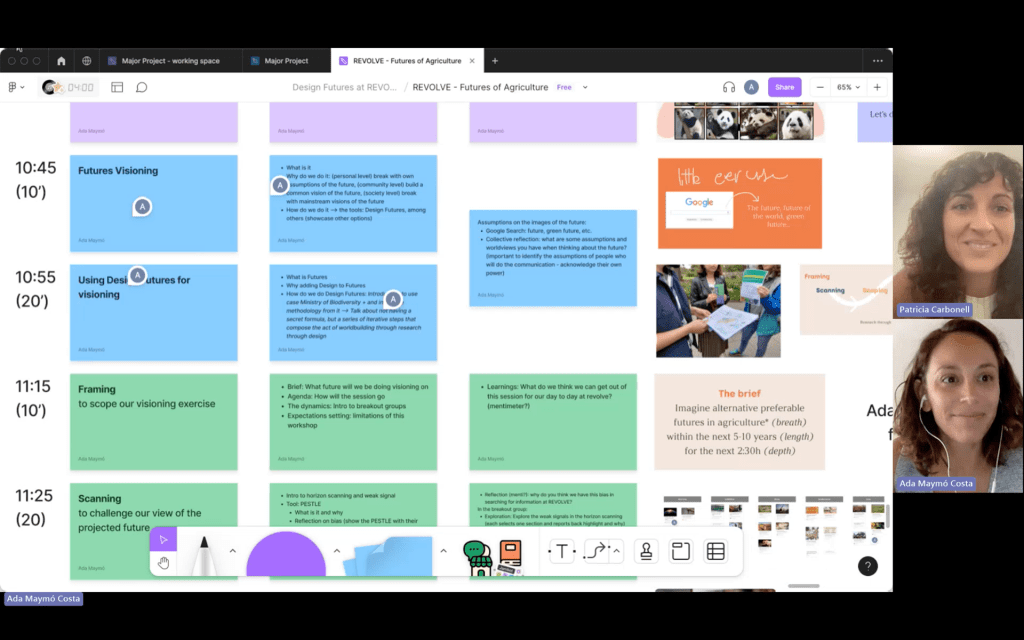
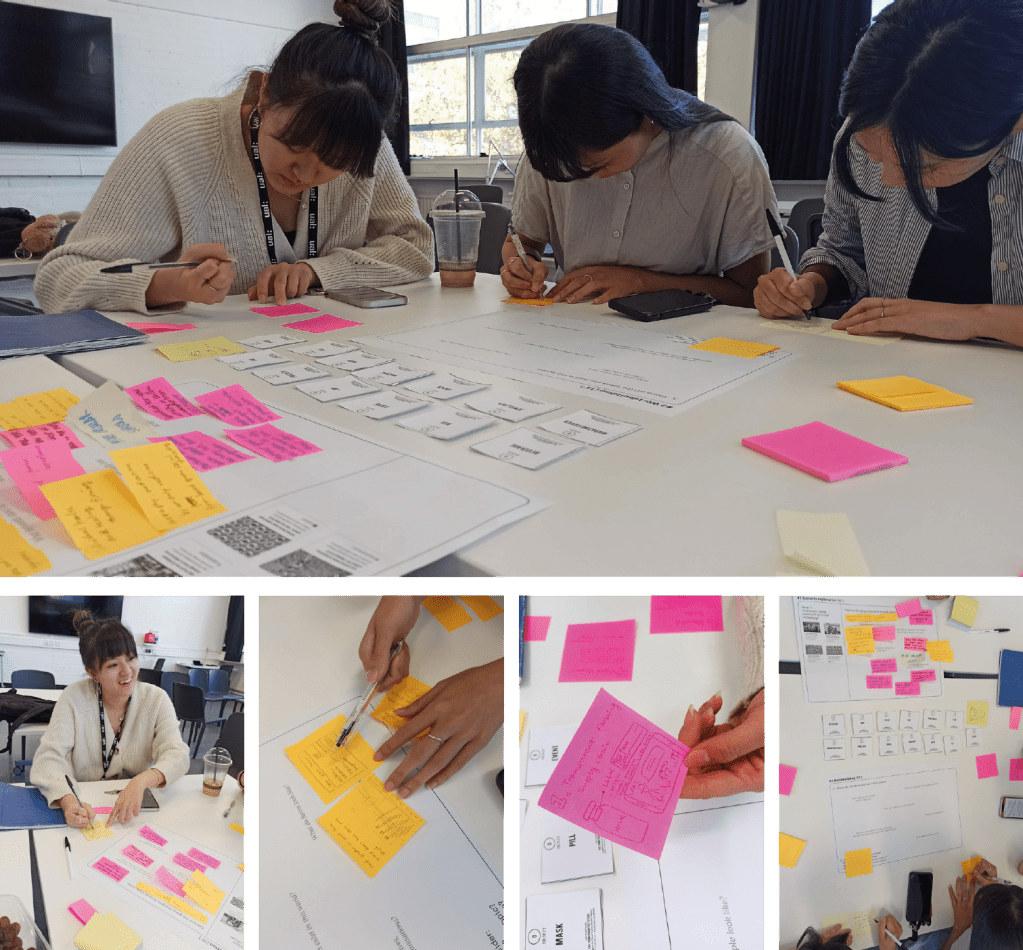
My role: Project Lead. This project is the final thesis of my MA in Service Design at the University of the Arts London and has been developed in a real context through a co-design approach with REVOLVE, a communication agency collaborating with stakeholders in the regenerative farming landscape, such as farmers, policymakers, research institutions, industry representatives and environmental organisations. My role was to facilitate the co-creation of this project among farmers, communicators and fellow service designers through in-depth interviews, co-creative workshops, sensing journeys, and framing activities with my collaborators. I also developed all the final deliverables.
THE PROBLEM
Agriculture is one of the biggest contributors to the triple planetary crisis: climate change, pollution and biodiversity loss. On the later, the conversion of natural ecosystems for crop production and pasture is the primary driver of biodiversity loss. Therefore, there is an urgent need to change the way we produce our food.
Measures have been in place to support a sustainable farming transition for years — for instance, the EU’s Common Agricultural Policy (CAP) has progressively raised its focus on supporting sustainable practices. However, policies have often proven ineffective, as they frequently overlook farmers’ constraints in adopting more sustainable practices. This project aimed at supporting farmers striving to transform agriculture but who struggle to imagine a preferable future to work towards.
THE SERVICE
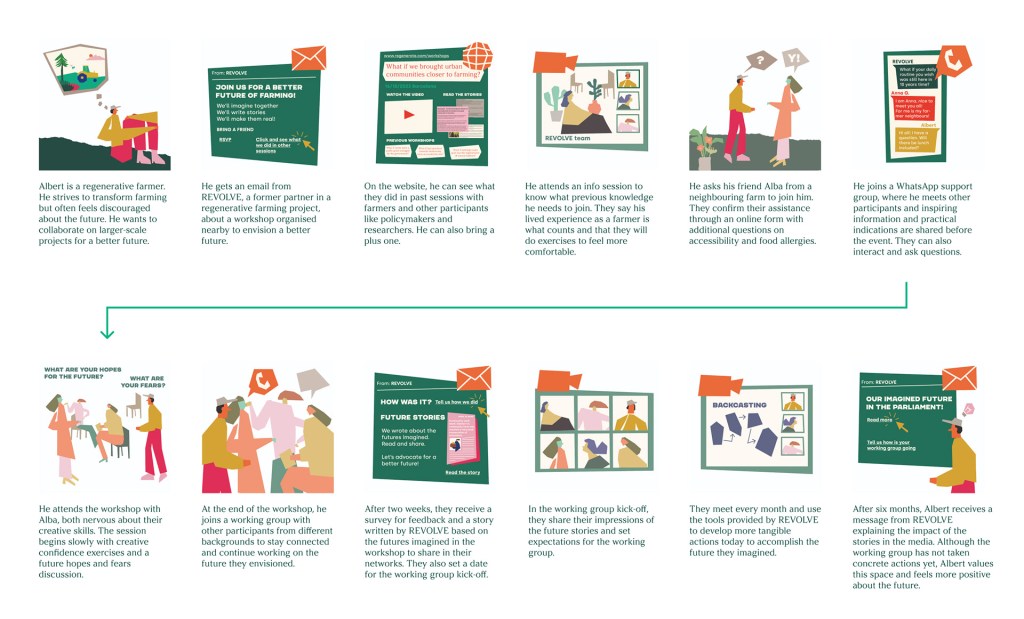
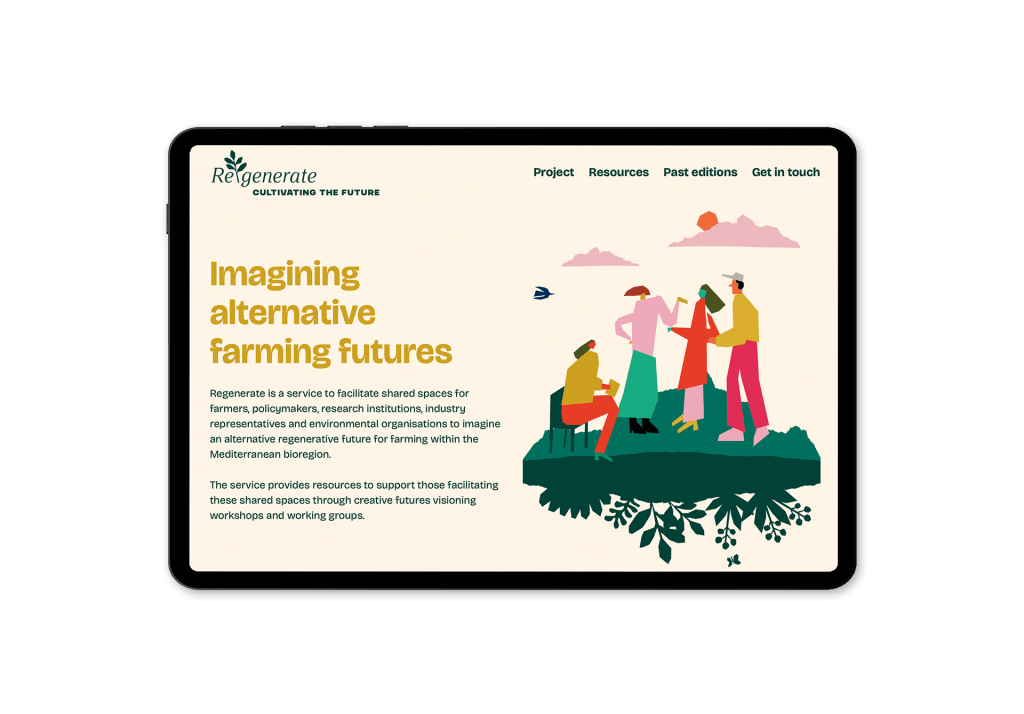
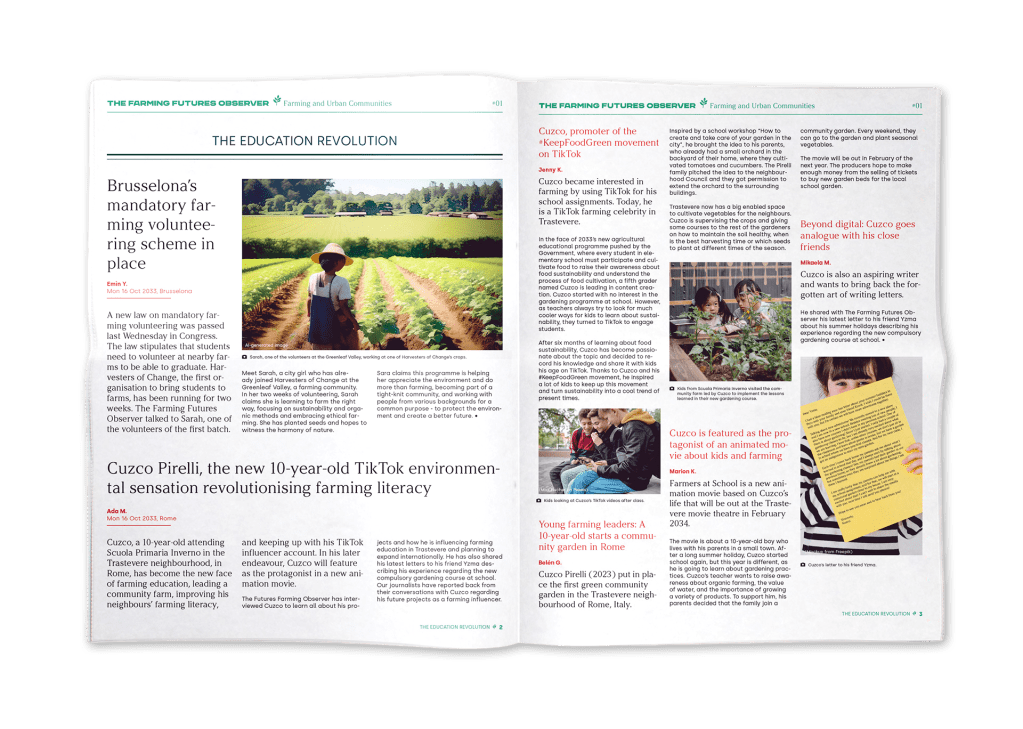
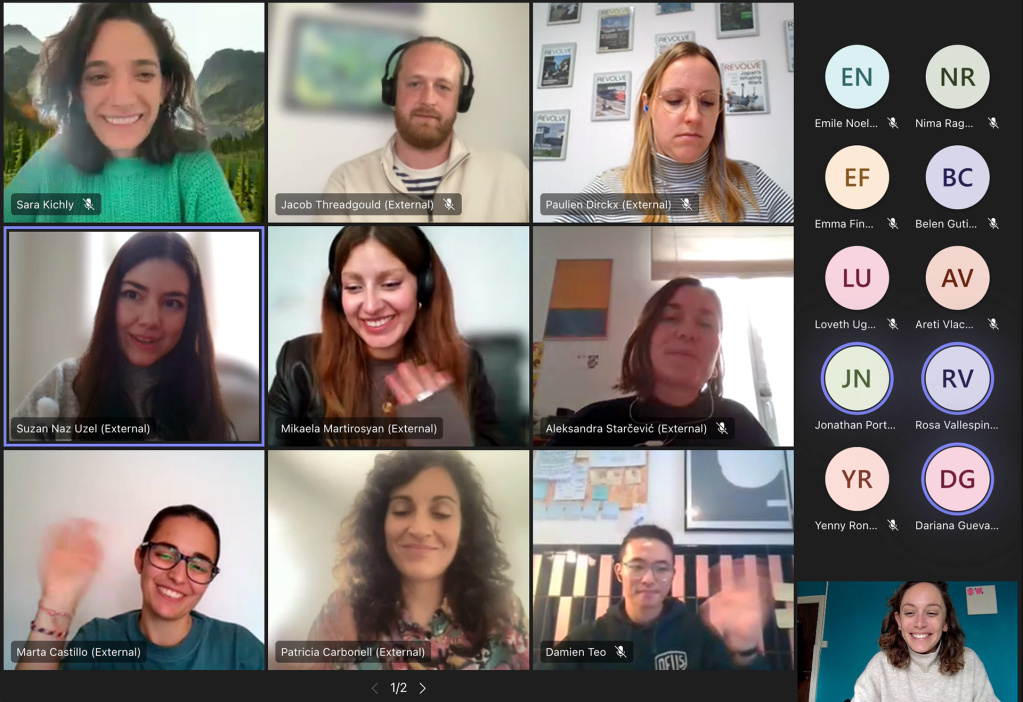
The service provides tools for REVOLVE to deliver Creative Futures Visioning workshops where farmers will imagine alternative preferable futures with other regenerative agriculture changemakers such as policymakers, research institutions, industry representatives and environmental organisations. The workshop outputs will then be transformed into fictional stories that can be used to advocate for the futures depicted and inspire further change within the local communities, who can keep exploring the workshop results in working groups.
SUPPORT MATERIALS
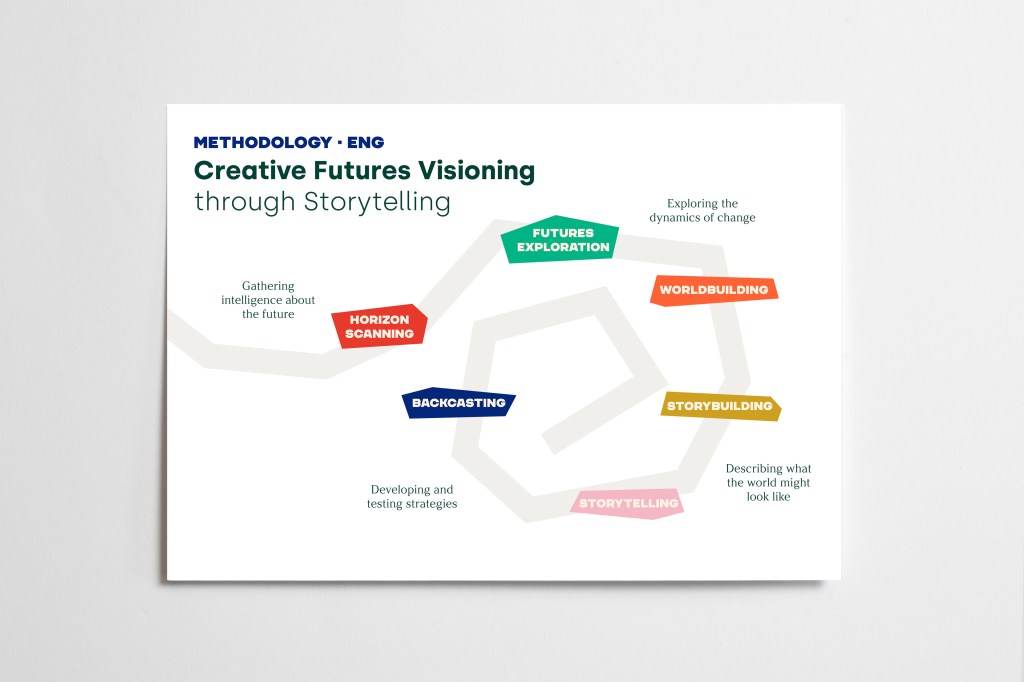
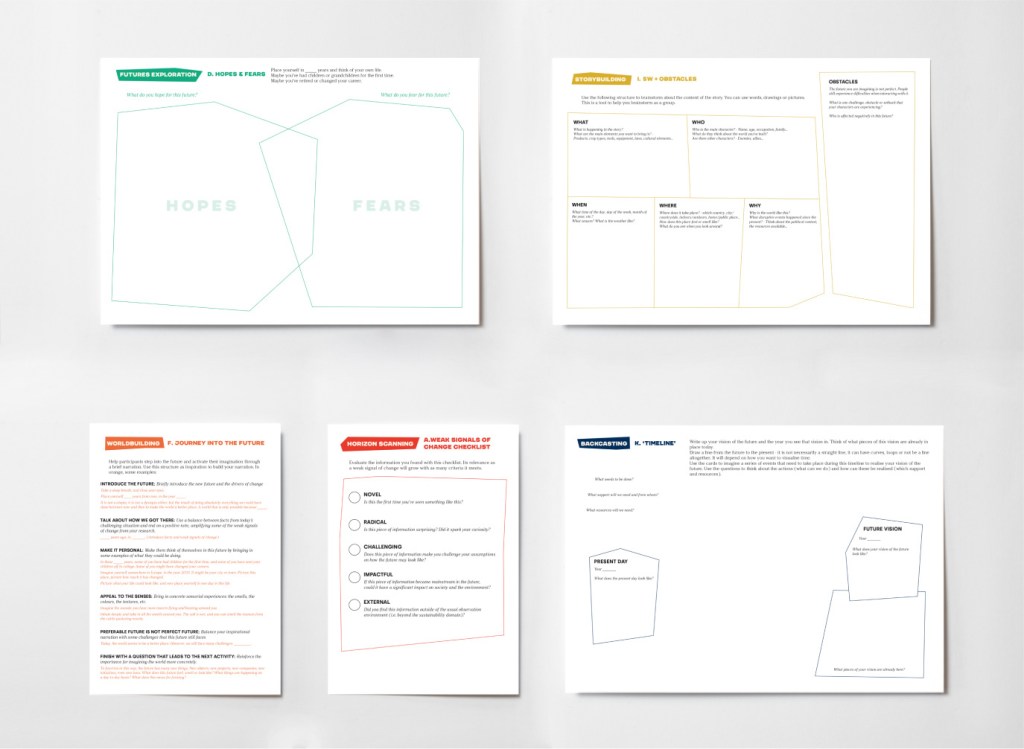
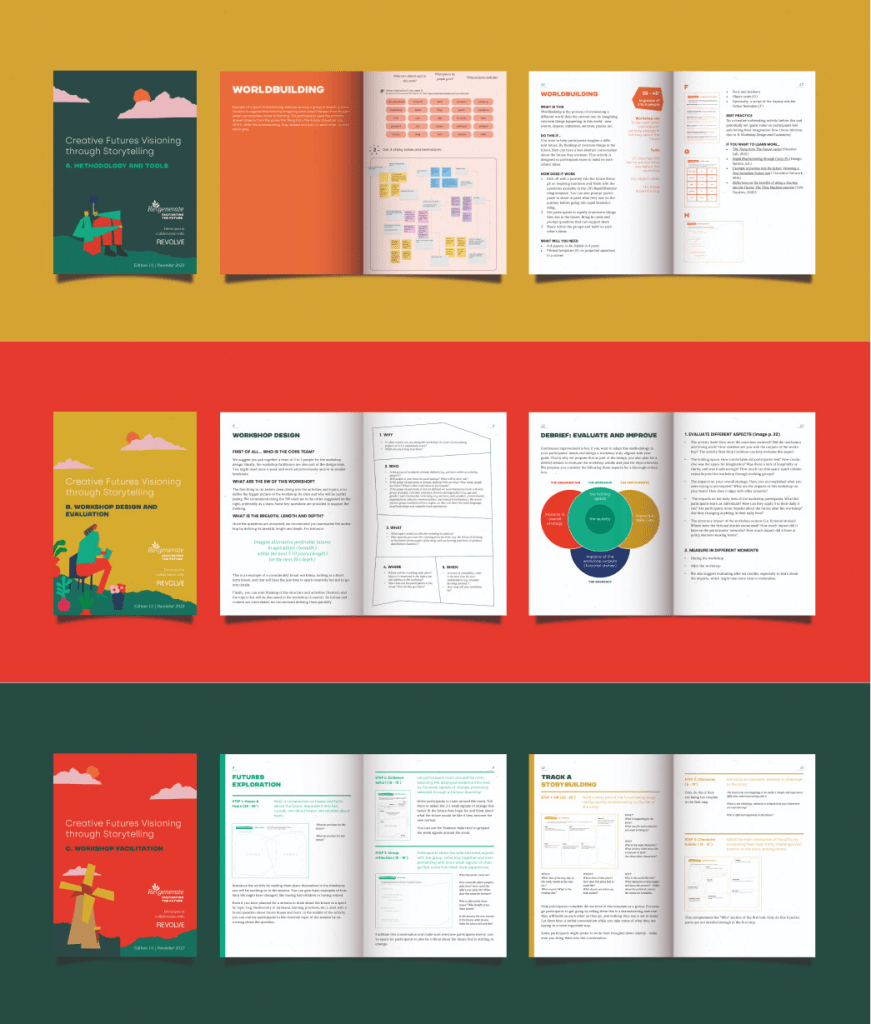
To ensure its correct delivery, the service provides capacity training for REVOLVE, and a series of support materials, including the Creative Futures Visioning through Storytelling methodology, guides and tools adaptable to the specific context, with relevant examples in the farming sector and considering its use with people not familiar with futures visioning.
THE PROCESS
This project used three different methodologies serving different purposes:
- The Double Diamond, as a framework
- Participatory Design approaches, to co-design with REVOLVE
- Transition Design, through systems thinking and futures visioning
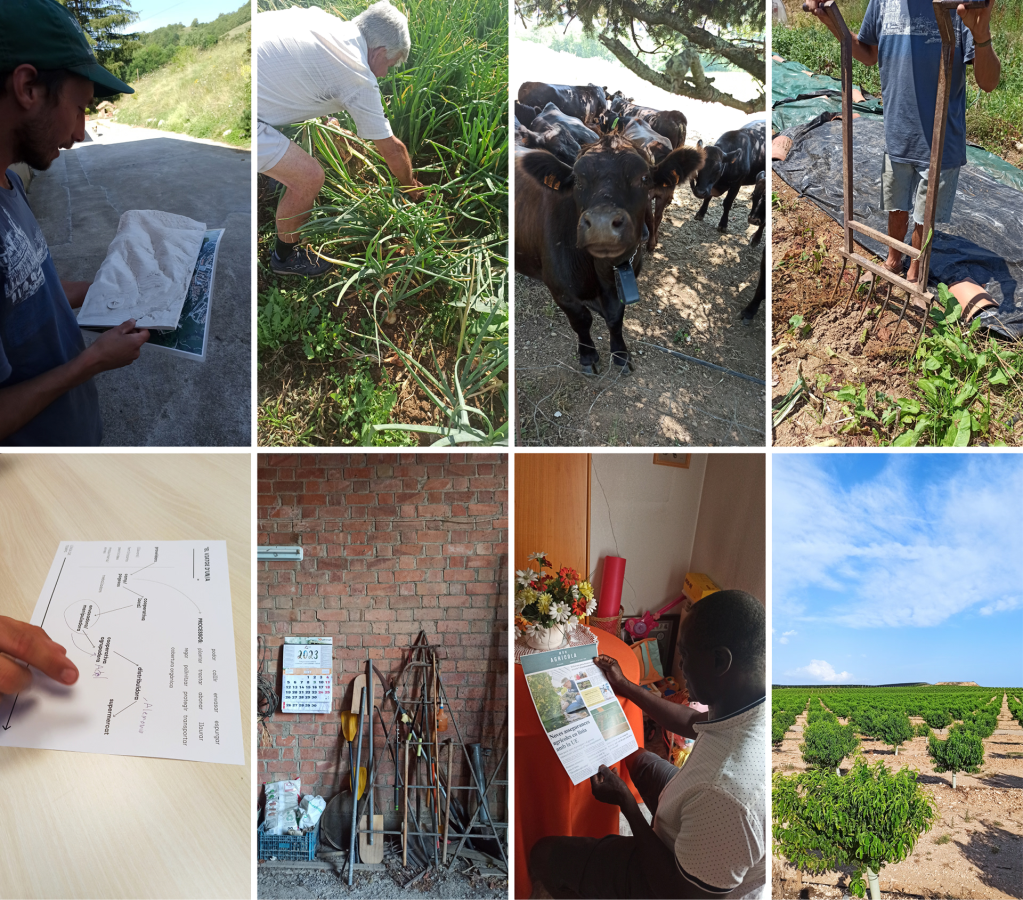
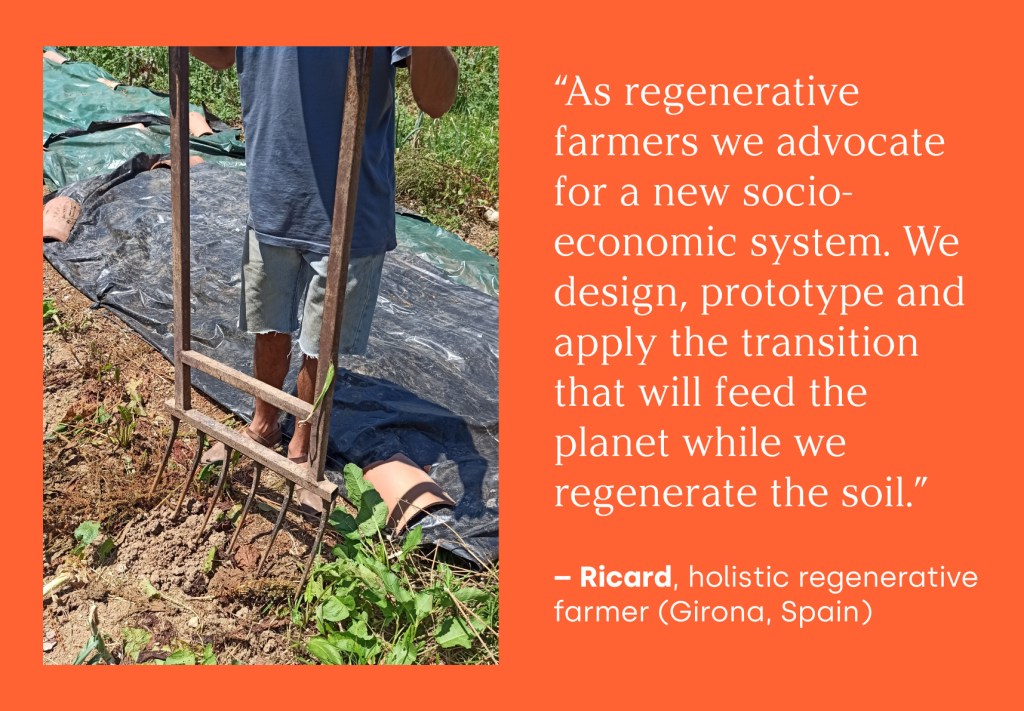
Conventional and regenerative farmer interviews and farm visits were the main discovery activity to understand their daily struggles and what prevents them from being more sustainable. The research shows that farmers’ narrative about the future is remarkably characterised by a deep sense of hopelessness, hindering their ability to envision a preferable future, thus preventing them from investing in sustainable farming practices today.
If you want to learn more about this project…
Read the full report (or sections of it): Read here.
Go to the website: https://regeneratefutures.org/
 Ada Maymó Costa